
Bearded Dragon Shedding: How Often Does a Bearded Dragon Shed?
Baby and juvenile bearded dragons shed every few weeks while they grow, while adults usually shed a few times per year in patches rather than all at once. Bearded dragon shedding, known as ecdysis, is a natural process that gives your reptile room to grow and replaces worn outer skin. Even so, many owners feel uneasy the first time their lizard turns dull and starts to peel.
At Ann Arbor Animal Hospital, we hear plenty of questions from local reptile owners about what normal bearded dragon shedding looks like, how long it should take, and when a stubborn patch deserves a closer look. This guide walks you through each stage of the shed cycle, the behavior changes you might notice, and the habitat conditions that set your dragon up for an easy shed. You’ll also learn which warning signs mean it’s time to schedule a visit with a veterinarian.
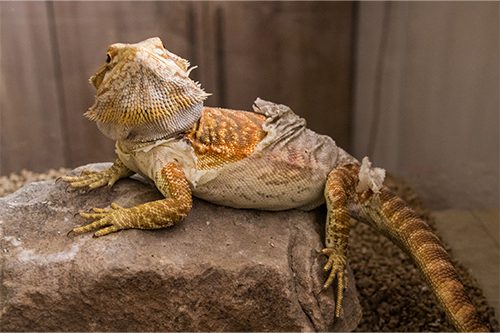
What Are the Stages of Bearded Dragon Shedding?
Bearded dragon shedding follows a fairly predictable pattern, though the timing varies from one lizard to the next.
Stage One: Dull, Grayish Skin
The first sign is usually a change in color. Your dragon’s scales lose their brightness and take on a faded, grayish, or whitish tint. This happens because a new layer of skin forms underneath the old one, and the two layers begin to separate. During early bearded dragon shedding, patches often appear on the head, back, or tail first. Some owners mistake this dull look for illness, but on its own it’s a normal part of the cycle.
Stage Two: Loosening and Lifting
Over the next several days, the old skin starts to pull away from the body. You may notice edges curling up around the spikes on the beard, along the sides, or near the base of the tail. The skin can look wrinkled or slightly puffy during this phase. Your dragon may show more interest in rubbing against branches, rocks, and other textured surfaces in its enclosure, which helps work the loose pieces free. Patience pays off during this part of bearded dragon shedding, since the skin separates on its own schedule.
Stage Three: Peeling and Fresh Scales
Unlike snakes, which typically shed in one long piece, bearded dragons peel in flakes and sections. One week the tail might shed, and the next the belly or legs follow. Once a patch comes off, the new scales underneath look bright and vivid. Some dragons even eat bits of their shed skin, which is a common reptile habit. Because bearded dragon shedding happens in sections, it’s normal to see a lizard that looks half-shed for a while.
What Bearded Dragon Shedding Behavior Should You Expect?
Bearded dragon shedding often comes with a few temporary personality changes, and most of them are completely normal.
Shedding can feel itchy and uncomfortable, so your dragon may act a little differently until the old skin comes off. Common behaviors during a shed include:
- Eating less or skipping a meal or two
- Rubbing or scratching against décor, rocks, and the enclosure floor
- Puffing out the eyes, which may help loosen skin around the face
- Spending more time basking or hiding
- Acting grumpy, flattening out, or showing a darker beard when approached
- Sleeping more than usual
These changes typically fade once the shed finishes. However, a dragon that refuses food for an extended period, loses weight, or seems weak and lethargic may be dealing with something beyond normal bearded dragon shedding. Changes in appetite and energy can overlap with signs of illness, parasites, or husbandry problems, so mention them to your veterinarian if they linger.
Should I Handle My Bearded Dragon While It’s Shedding?
Gentle, brief handling is generally fine during bearded dragon shedding, but follow your dragon’s lead. Some lizards tolerate it well, while others become irritable when their skin feels tight and itchy. If your dragon hisses, puffs its beard, or tries to scramble away, give it some space and try again later.
Avoid pulling, picking, or peeling any loose skin, even when a flap looks ready to come off. Skin that hasn’t fully separated can tear the healthy layer below, leading to soreness or infection. Let the shed come off on its own, and hold your dragon securely with clean hands so it feels safe.
What Do You Do When Your Bearded Dragon Is Shedding?
The best way to help a bearded dragon shed is to focus on its environment, nutrition, and hydration all year, not just during a shed.
A healthy shed starts long before the skin turns dull. Bearded dragons that live in a well-designed habitat usually shed with little help from their owners. Habitat factors that support smooth bearded dragon shedding include:
- Proper humidity: Bearded dragons come from arid regions, so enclosure humidity generally sits around 30 to 40 percent. Air that’s too dry can make shedding harder, while excess moisture raises the risk of respiratory and skin infections.
- Quality UVB lighting: UVB bulbs support vitamin D3 production along with skin and bone health. Bulbs lose strength over time, so ask your vet how often to replace yours.
- Correct temperature gradient: A warm basking spot and a cooler side help your dragon regulate its metabolism, which influences growth and shedding.
- Textured décor: Rough rocks, branches, and logs give your dragon natural places to rub off loose skin.
- Balanced diet and fresh water: Appropriate insects, leafy greens, and access to clean water support healthy skin from the inside out.
If you’re unsure whether your setup meets your dragon’s needs, a husbandry review during a wellness exam can uncover small adjustments that make a big difference. Your veterinarian can also discuss whether occasional baths or misting fit your pet’s individual situation.
When to See The Veterinarian for Dysecdysis in Bearded Dragons
Retained shed, called dysecdysis, happens when bearded dragon shedding doesn’t finish and old skin stays attached. It most often affects the toes, the tail tip, and the area around the eyes. Stuck skin can tighten as it dries and restrict blood flow, which may lead to tissue damage or even the loss of a toe or tail tip. Contact your veterinarian if you notice shed that stays put for more than a couple of weeks, bands of skin around the toes or tail, swelling, dark discoloration, or crusting near the eyes.
How Long Does Bearded Dragon Shedding Last?
A single round of bearded dragon shedding usually lasts anywhere from a few days to about two weeks, depending on your dragon’s age, size, and health.
Shed Frequency and Duration by Age
Age plays the biggest role in how often your dragon sheds and how long each cycle takes. Baby bearded dragons grow quickly and may shed every week or two, often finishing each round in just a few days. Juveniles, roughly six months to a year old, tend to shed every four to six weeks as their growth slows. Adult bearded dragons shed far less often, usually a few times a year, and each shed may stretch out longer because it moves in patches across different parts of the body.
Factors That Can Change the Timeline
Several things can speed up or slow down the process. Seasonal shifts, especially the cooler months when some dragons enter brumation (a hibernation-like rest period), can pause or delay shedding. Stress from a move, a new enclosure, or a change in routine may also affect the cycle. Low humidity, poor nutrition, dehydration, and outdated UVB bulbs can all make bearded dragon shedding drag on longer than it should.
Underlying health issues sometimes show up as irregular sheds too. Mites, skin infections, and metabolic conditions can cause patchy, incomplete, or unusually frequent shedding. If your dragon’s pattern suddenly changes, or a shed seems to stall partway through, a reptile exam can help pinpoint the cause.
Tracking bearded dragon shedding dates in a notebook or phone app is a simple way to spot trends. Bringing that record to your next appointment gives your veterinarian useful insight into your dragon’s growth and overall wellness.
Partner With Ann Arbor Animal Hospital
Bearded dragon shedding is a normal sign of growth and renewal, and most shed cycles wrap up without any trouble. Knowing what each stage looks like, which behaviors are expected, and how your dragon’s habitat affects its skin helps you catch problems early, before a small patch of stuck skin becomes a bigger concern.
The team at Ann Arbor Animal Hospital is here to help with wellness exams, habitat questions, and bearded dragon shedding concerns like retained skin around the toes or tail. Whether you just brought home a baby dragon or have shared your home with a scaly companion for years, we’re happy to answer your questions and help your reptile thrive. To schedule an appointment for your bearded dragon, call us at (734) 662-4474 today.
Recent Posts
About Us
Ann Arbor Animal Hospital is a locally-owned animal hospital operating for over 90 years in Ann Arbor, MI.