
My Dog Is Holding Front Paw & Limping. Should I See The Vet?
When your dog suddenly starts limping or holding up a front paw, it’s hard not to worry. You might wonder if it’s something simple like a small cut, or if it points to a more serious problem. Either way, limping is your dog’s way of saying something doesn’t feel right. Below, we’ll break down what causes a dog to hold up a front paw and limp, when it’s time to call your Ann Arbor vet, and what to expect during a visit. If your dog is favoring one leg, you’re in the right place, keep reading to learn what might be going on and how to help.
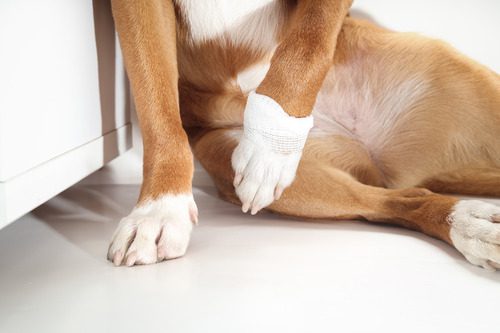
What It Means When Your Dog Is Holding a Front Paw & Limping
Limping and paw lifting are both signals that something is wrong. Your dog is trying to protect the affected leg or foot. This may be due to a surface-level issue like a cut or insect bite, or something deeper, such as a joint injury or bone abnormality. Unlike a back leg limp, which can often relate to hip or knee problems, limping on a front leg may point to issues in the paw, wrist, elbow, or shoulder.
It’s also worth noting whether the limp came on suddenly or developed over time. Sudden limping often results from an acute injury, while gradual limping could indicate a chronic issue. Either way, a dog holding a front paw & limping should not be ignored. Even if your dog seems otherwise happy, wagging their tail and eating normally, limping is a sign of discomfort and your veterinarian can help get to the bottom of it.
Common Causes of a Dog Holding Front Paw & Limping
Several possible conditions and injuries can lead to this behavior. Here’s a breakdown of some of the most frequent culprits.
Paw Injuries
Cuts, scrapes, splinters, or insect stings can all cause pain that leads to limping and paw lifting. You might also see swelling, redness, or bleeding if the injury is visible. Dogs who walk on rough pavement, frozen ground, or hot pavement are more prone to surface injuries. If your dog is holding their paw up after a walk, they may have picked up something painful in the pad or between their toes.
Muscle Strains and Sprains
Dogs can strain or sprain the muscles, tendons, or ligaments in their front legs, especially during rough play or athletic activity. This is particularly common in energetic breeds or those that love to jump and run. A mild sprain might result in a subtle limp, while a more significant injury could cause your dog to avoid putting any weight on the leg.
Joint Issues
The front legs include several important joints, including the wrist (carpus), elbow, and shoulder. Any of these can develop inflammation, instability, or degenerative conditions. Elbow dysplasia, for example, is a genetic condition that causes abnormal development of the elbow joint and can lead to limping in young dogs. Arthritis can also develop over time, especially in older dogs or larger breeds.
Fractures or Broken Bones
A dog that is holding up a front paw and refusing to use it could have a fracture. Not all fractures are obvious as some dogs may have a hairline crack that still causes significant pain. Trauma from a fall, being stepped on, or getting caught in something can result in broken bones in the paw or leg.
Neurological Conditions
In some cases, nerve damage or neurological disease can affect limb function, making it difficult or painful for your dog to walk normally. This might be accompanied by other symptoms such as weakness, tremors, or dragging the paw.
Infections or Growths
Abscesses, infections, or growths such as cysts or tumors in the paw or leg can also cause limping. Swelling or heat in the area may be present, but not always. These conditions often require veterinary diagnostics to identify and treat properly.
When to Call Your Vet for a Limping Dog
You know your dog best, but even subtle changes in how they walk should be taken seriously. If your dog is holding a front paw & limping for more than a day or if the limp seems to get worse, it’s time to reach out to your veterinarian.
Signs That Warrant Prompt Veterinary Attention:
- Your dog refuses to put any weight on the leg
- The leg is visibly swollen or deformed
- You notice bleeding, a puncture wound, or signs of trauma
- Your dog is in obvious pain or vocalizing when moving
- There are signs of infection like discharge, heat, or odor
- The limp started suddenly and doesn’t improve with rest
- Your dog seems lethargic or has a reduced appetite along with the limp
It’s always safer to have your veterinarian evaluate the issue than to wait and see if it improves. Delaying care can lead to worsening injuries or complications, especially if your dog continues to move around on a potentially damaged limb. Call Ann Arbor Animal Hospital at (734) 662-4474 to schedule an appointment if your dog is holding their front paw and limping. Early evaluation helps avoid more serious issues and gives your pet the best chance at a smooth recovery.
What to Expect at the Vet for a Limping Dog
When you bring your dog to your veterinarian at Ann Arbor Animal Hospital for limping, the first step will be a physical examination. Your vet will carefully examine your dog’s front leg, feeling along the bones, joints, and muscles to identify signs of pain, swelling, or instability.
Additional Diagnostics May Include:
- X-rays to look for fractures, joint damage, or bone deformities
- Joint aspiration if swelling is present and an infection or immune issue is suspected
- Bloodwork to assess inflammation or infection
- Ultrasound or advanced imaging if a soft tissue injury or internal abnormality is suspected
Once your veterinarian identifies the underlying cause, they’ll recommend a treatment plan. This may involve medication, rest, follow-up exams, or in some cases, surgery or rehabilitation.
Can a Limp Go Away On Its Own?
Some minor injuries may resolve with rest, but it’s important not to make assumptions. Dogs often mask their pain, and just because they’re walking again doesn’t mean the issue is fully resolved. Continued stress on an injured limb can lead to long-term damage. If your dog has been limping or holding up a paw, a professional evaluation is the most reliable way to rule out a serious condition. Even temporary limping deserves attention to prevent recurrence and support long-term mobility.
How to Help Your Dog Stay Comfortable Before the Appointment
While you wait for your veterinary appointment, there are a few ways you can support your dog’s comfort without providing treatments:
- Limit physical activity by keeping your dog calm and confined
- Avoid stairs or jumping on furniture
- Use a sling or towel under their chest for support if they need help walking
- Keep them indoors and off hard or uneven surfaces
Avoid giving any medications or trying to treat the limp at home. Over-the-counter pain medications made for humans can be dangerous to dogs, and applying topical treatments without guidance may do more harm than good.
Limping Isn’t Always Minor: Take Action for Your Dog’s Health
Even if your dog seems fine otherwise, limping and holding up a paw can be a signal that something deeper is going on. The earlier the issue is diagnosed, the easier it is to manage and resolve. Whether the cause is minor or more complex, your veterinarian can offer a clear path forward. If you notice your dog holding a front paw & limping, call Ann Arbor Animal Hospital at (734) 662-4474 or schedule an appointment online. Our team will assess your dog’s condition and recommend the next steps to help them move comfortably again.
Recent Posts
About Us
Ann Arbor Animal Hospital is a locally-owned animal hospital operating for over 90 years in Ann Arbor, MI.